

What Is SSD-Based Cyber Defense?
SSD-based cyber defense puts security measures directly into the storage device’s firmware rather than relying on separate software programs. This means protection stays with the data at all times. This is a strong barrier against both digital and physical threats.
Traditional security methods often focus on software solutions that sit between the user and their data. These programs must be updated constantly to stay ahead of new threats. In contrast, hardware-based security builds protection into the physical components that store the data. This is a more complete shield that works even when software defenses fail.
The idea behind this approach is simple: if you can secure the actual storage device, you create a last line of defense that hackers cannot bypass through software tricks. This changes the security game from a constant race to patch software to a more stable model where core protections remain in place regardless of new attack methods.
How X-PHY® Makes Hardware Security Work
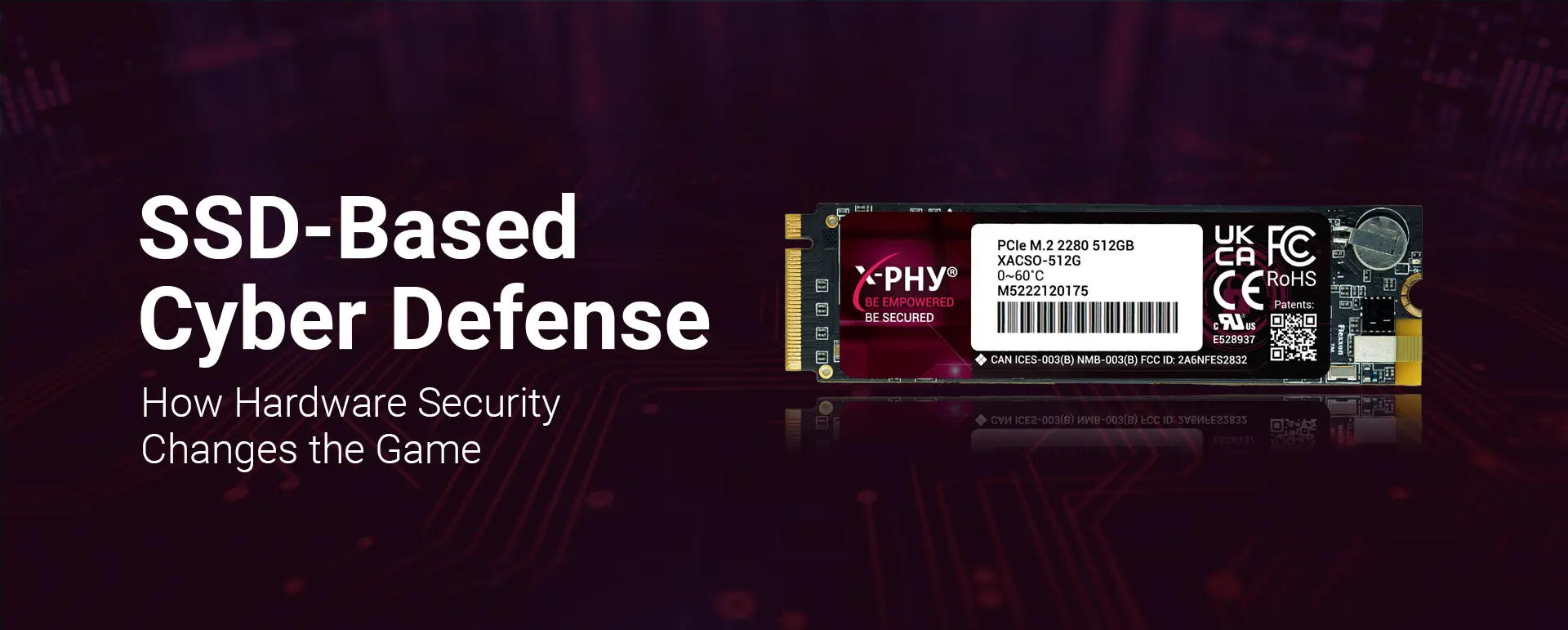
The X-PHY® AI-embedded cyber-secure SSD shows how this concept works in practice. By examining its features, we can understand the advantages of hardware-based security solutions.
AI at the Firmware Level
X-PHY® embeds AI directly into the SSD firmware. This AI watches how data moves in and out of storage and can spot unusual patterns that might mean an attack is happening. Because this happens at the hardware level, it works even when software defenses fail.
The AI system runs 24/7 without needing updates or human oversight. It learns what normal data access looks like for your system and can detect when something unusual occurs. This could be the rapid encryption attempts of ransomware or the mass data access of a data theft attack.
Unlike software solutions that need constant internet access to download threat signatures, the X-PHY® system works autonomously. This makes it effective even in air-gapped environments where systems cannot connect to the internet for security reasons.
One-Door Access Point
All data must pass through a single access point (the PCIe/NVMe interface), which makes it much easier to monitor and control what happens to your information. Think of it like having just one entrance to a building instead of dozens – it’s much easier to guard. This single access point acts as a natural checkpoint where all data can be examined before it enters or leaves storage.
Physical Attack Prevention
What makes hardware-based security special is its ability to defend against physical threats too. X-PHY® includes built-in sensors that can detect:
- Changes in light (when someone opens a device)
- Motion (when someone moves or tampers with the device)
- Temperature changes (which might indicate someone trying to bypass security)
If these sensors detect something wrong, the drive can lock down or even wipe data to keep it safe. The physical protection extends to anti-theft measures as well. If a laptop or storage device goes missing, remote management features allow administrators to lock or wipe the drive. For highly sensitive data, a “Rapid Purge” mode can permanently destroy information before it falls into the wrong hands.
Zero-Trust Defense Strategy
The X-PHY® system follows a zero-trust security model, which means it never assumes any access request is safe by default. Each request gets checked against normal patterns, and anything suspicious faces extra scrutiny or gets blocked entirely.
This zero-trust approach matters because many modern attacks happen after hackers have already breached the outer defenses of a system.
Why Hardware-Based Security Beats Software Alone
Zero-Day Protection
Software security depends on updates to fix known problems. But what about threats nobody knows about yet? Hardware security like X-PHY® watches for unusual behavior instead of looking for known attack signatures. This means it can stop new threats before anyone even knows they exist.
Zero-day vulnerabilities is one of the biggest challenges in cybersecurity. These unknown flaws let attackers bypass security before developers can create patches. Hardware-based solutions offer protection against these unknown threats by focusing on abnormal data access patterns rather than specific attack methods.
No Update Dependencies
Once installed, hardware security works without constant updates. This gives you constant protection without needing internet access or regular maintenance.
This independence from updates solves several common problems:
- No security gaps while waiting for patches
- No risk from missed updates
- No disruption from update processes
- No need for constant internet connectivity.
Fewer False Alarms
Because hardware solutions look at actual data access patterns instead of guessing based on behavior rules, they tend to have fewer false positives than software solutions. False alarms create major problems for security teams. Each alert must be investigated, which takes time and resources. Too many false alarms lead to “alert fatigue,” where security staff might start ignoring warnings.
Independent Security Environment
Perhaps the most important advantage of hardware-based security is its independence from the operating system it protects. Software security solutions run on the same system they defend, which means they can be disabled by attacks that compromise the operating system. Hardware security exists in a separate environment with its own processing resources and memory. This separation makes it much harder for attackers to disable or bypass security measures, even if they gain control of the main system.
Real-World Applications
For Laptops
X-PHY® technology fits into various laptop models, giving them built-in protection that travels with the device. This is perfect for workers who need to keep data safe while on the move.
The technology has been integrated into several product lines:
- Zepto Series: Professional, lightweight laptops designed for business use
- CyberPad Series: Compact devices for mobile users
- Ace Series: Complete solutions for small and medium businesses
These protected laptops help companies meet their security needs without adding cumbersome external security devices or complex software setups. The protection stays with the data regardless of where the laptop goes or what networks it connects to.
For Servers
The X-PHY® Server Defender offers advanced protection for data centers and enterprise servers. It uses special Matrix Shield technology to:
- Monitor systems around the clock
- Detect threats in real time
- Recover instantly from attacks with zero downtime
- Scale as your business grows
Server environments face constant attack attempts and need special protection due to the valuable data they store. The Server Defender installs as a PCIe card, providing hardware-level security without major changes to existing systems.
The Matrix Shield technology used in the Server Defender breaks down files and objects into basic numeric values. This strips away the disguises hackers use to hide malicious code and allows the system to detect even small changes that might indicate an attack.
One standout feature is the ability to perform “seamless live reversion” during attacks. This means the system can restore corrupted files instantly without stopping server operations, which results in zero downtime even during active attack attempts.
Benefits for Business
Switching to SSD-based cyber defense gives companies several key advantages:
24/7 Protection Without Human Input
Once set up, the system works by itself. This cuts down on human error, which causes over 95% of data breaches according to security research.
Human error remains one of the biggest security risks for any organization. People forget to update software, click on malicious links, use weak passwords, or make other mistakes that open security holes. Hardware-based security provides a safety net that catches these errors before they lead to data breaches. The autonomous nature of these systems also reduces the workload on IT security teams. With fewer alerts to chase and less maintenance work, staff can focus on more strategic security tasks rather than day-to-day firefighting.
Physical and Digital Security Combined
Most security solutions focus on either digital or physical threats. Hardware-based security handles both, giving you complete protection in one package. This dual protection matters more as remote work becomes common. When devices leave the controlled environment of an office, they need security that works regardless of their physical location or who might have access to them.
Faster Recovery After Attacks
If an attack does happen, systems can recover much faster because the security happens at the storage level. Some solutions like the X-PHY® Server Defender promise zero downtime even during recovery.
Traditional recovery from cyber attacks often follows this pattern:
- Detect the attack (often after damage occurs)
- Shut down affected systems
- Clean and restore from backups
- Verify and restart systems
This process can take hours or days, during which business operations suffer. Hardware-based solutions can often detect and stop attacks before data loss occurs. If damage does happen, they can restore affected files almost instantly from protected storage areas.
The Future of Data Protection
As cyber threats get worse, we’ll likely see more focus on hardware-based security. SSD-based cyber defense points toward a future where protection is built into devices from the start rather than added as an afterthought.
Several trends support this shift toward hardware security:
- Growing sophistication of attacks that bypass software defenses
- Increased remote work that puts devices outside controlled environments
- Rising costs of data breaches (both financial and reputational)
- Tighter regulations around data protection worldwide
Implementation Considerations
For companies thinking about adding SSD-based cyber defense to their security stack, several factors deserve attention:
- Compatibility with existing systems
- Deployment strategy (all at once or phased approach)
- Staff training needs
- Integration with current security tools
- Cost-benefit analysis
Conclusion
SSD-based cyber defense changes how we think about data protection. Instead of just reacting to threats, this approach stops them before they can do harm. For many businesses, this might be the security upgrade they need in a time when data has never been more valuable—or more at risk. As cyber threats continue to advance, companies that adopt hardware-based security gain an important advantage in the ongoing battle to keep their data safe.
The move toward hardware-based security doesn’t replace good security practices or other defensive measures. Instead, it adds a crucial layer of protection that works when other measures fail.