

What is RaaS (Ransomware as a Service)?
Cybersecurity threat level has reached new heights with the rise of Ransomware as a Service (RaaS). This business model has turned ransomware from a complicated cyber weapon into a ready-to-use tool that any Tom, Dick and Harry can deploy. This has led to a stark increase in ransomware attacks. It now accounts for 20% of all cybercrime incidents, with breach costs hitting a record high. In the first half of 2022, there were an estimated 236.1 million ransomware attacks globally.
Ransomware as a Service (RaaS) is a criminal business model where ransomware developers sell or rent ready-made attack tools to affiliates, making it easy for even unskilled actors to launch ransomware campaigns. Operated like legitimate SaaS platforms, RaaS groups provide technical support, updates, and profit-sharing models, which has accelerated attack speed and scale worldwide. This professionalised ecosystem is responsible for a significant rise in global ransomware incidents, driving faster breaches and higher financial impact for organisations.
RaaS has caused a sharp turn in cybercrime tactics. Much like legitimate software services, RaaS often operate on a subscription model where cybercriminals can rent or buy ransomware tools from developers. This shift has made ransomware attacks more common and more dangerous than ever before. The model mirrors how businesses use software services – but with criminal intent. Developers create and maintain the ransomware tools, while “affiliates” (the attackers) pay to use these tools against targets. This arrangement has made ransomware attacks more efficient and frequent.
How It Works
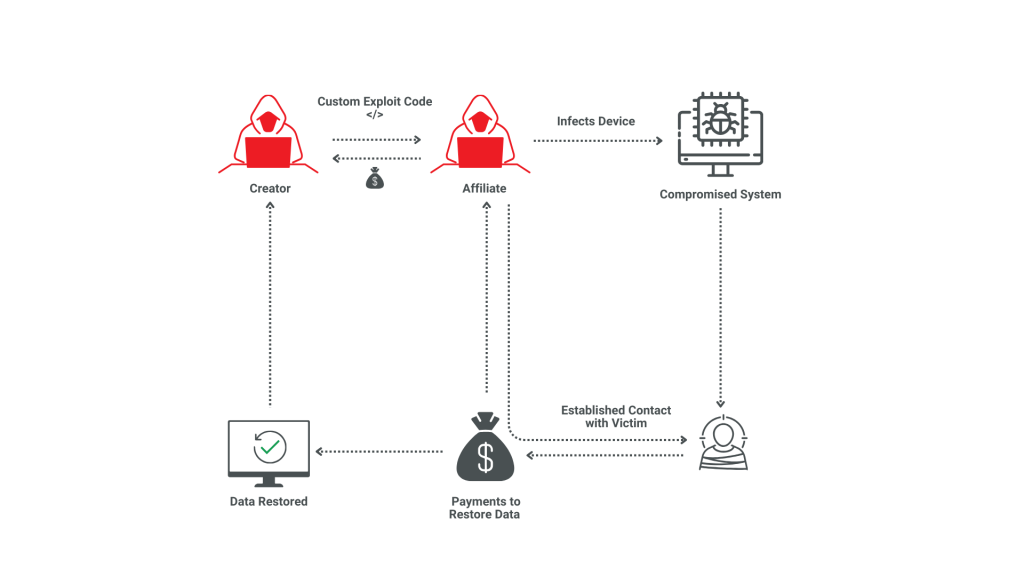
The RaaS marketplace offers various payment options to potential attackers. Some operators charge monthly subscriptions starting at just $40, while others sell one-time access to their ransomware code. Many prefer profit-sharing arrangements, taking 30-40% of successful ransom payments. Some even offer affiliate programs combining monthly fees with profit sharing.
But RaaS providers have created a complete criminal support system. Attackers get technical support, payment processing portals, and tools for ransom negotiation. Many RaaS platforms include access to private criminal forums where attackers share tips and strategies. This level of professional support makes RaaS more dangerous than traditional ransomware because attackers don’t need technical skills – they just need money to start their criminal operations.
Why RaaS Matters to Your Business
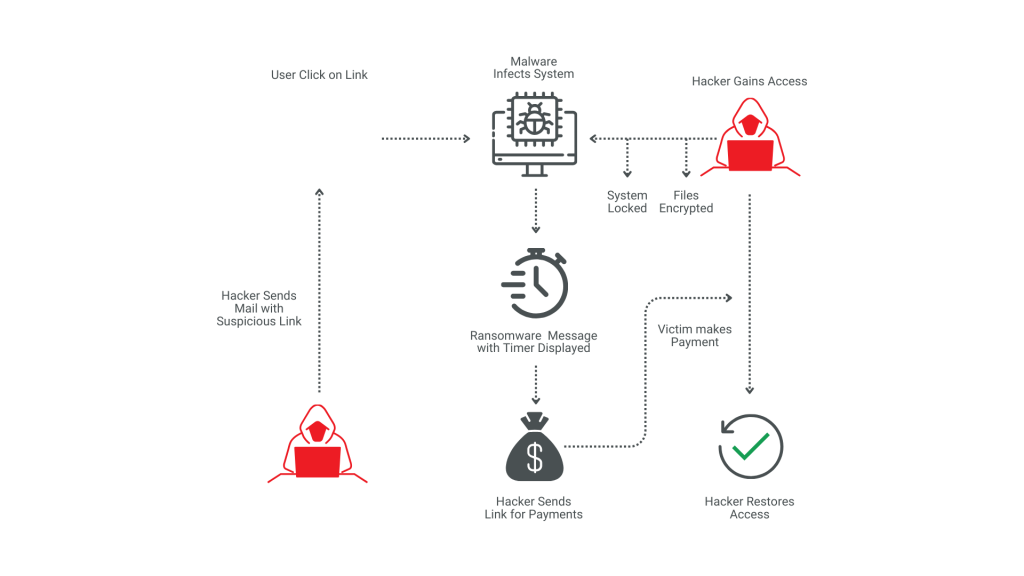
The professionalization of ransomware has created unprecedented challenges for cybersecurity. Attack speeds have increased dramatically – what once took criminals 60 days to execute now happens in less than four days. This gives security teams almost no time to detect and stop attacks before they cause damage. RaaS groups operate with shocking efficiency. They maintain customer support teams, conduct quality assurance testing, and release regular software updates. Some even run marketing campaigns to attract new criminal clients.
Scale of the Threat
The growing RaaS threat has become clear through recent attacks. The LockBit group has emerged as one of the most active RaaS operators, targeting businesses worldwide with sophisticated attacks. Their ransomware strain has attacked thousands of organizations across multiple sectors, demanding ransoms that sometimes exceed $50 million. In 2023, the CL0P ransomware group exposed millions of records through a single file transfer application vulnerability. Their attack on the MOVEit file transfer tool affected hundreds of organizations, including government agencies and Fortune 500 companies. The breach compromised sensitive data from more than 60 million individuals.
The DarkSide ransomware group made headlines in 2021 with their attack on Colonial Pipeline, causing fuel shortages across the eastern United States and resulting in a $4.4 million ransom payment. Though DarkSide claimed to shut down after this attack, they quickly rebranded as BlackMatter, demonstrating how RaaS operators adapt to avoid detection.
Conti, another notorious RaaS group, launched a devastating attack against the Costa Rican government in 2022, crippling multiple government agencies and declaring a “state of emergency.” The attack disrupted essential services and demonstrated how RaaS could impact entire nations.
The relatively new Eldorado RaaS platform, launched in early 2024, claimed 16 victims in just three months of operation. Their rapid success shows how quickly new RaaS operations can establish themselves and begin causing damage. The group targets both Windows and Linux systems, showing the expanding scope of RaaS attacks.
The Hive ransomware group, before being disrupted by the FBI in 2023, had attacked more than 1,500 organizations worldwide, collecting over $100 million in ransom payments. Their targets included hospitals and healthcare organizations, highlighting the ruthless nature of RaaS operators who show no concern for potential human casualties.
Hardware-Based Protection
This new threats require a new approach. Our innovative strategy is very important. While most security solutions focus on software protection, we take security to the hardware level. Our solutions provide protection that ransomware can’t bypass, as it’s built into the physical infrastructure of your devices. These embedded security solutions offer continuous protection through AI-based monitoring and real-time threat detection. The system responds immediately to suspicious activities and doesn’t require constant updates. This approach addresses fundamental weaknesses in traditional software security, which often fails because it requires constant updates, can be disabled by attackers, or misses new attack variations.
Best Practices for RaaS Protection
Organizations need to build their security strategy from the ground up, starting with hardware security. This foundation supports additional security measures, creating multiple layers of protection against ransomware attacks. Regular testing and updates to incident response plans ensure organizations can react quickly when threats appear. Security protocols should adapt as new threat patterns emerge.
Conclusion
RaaS has transformed ransomware from a specialized cyber weapon into a widespread threat. Its professional structure, easy access, and constant evolution make it more dangerous than traditional ransomware. The key to protection is implementing strong security measures, starting at the hardware level.