


What is a Man in the Middle Attack?
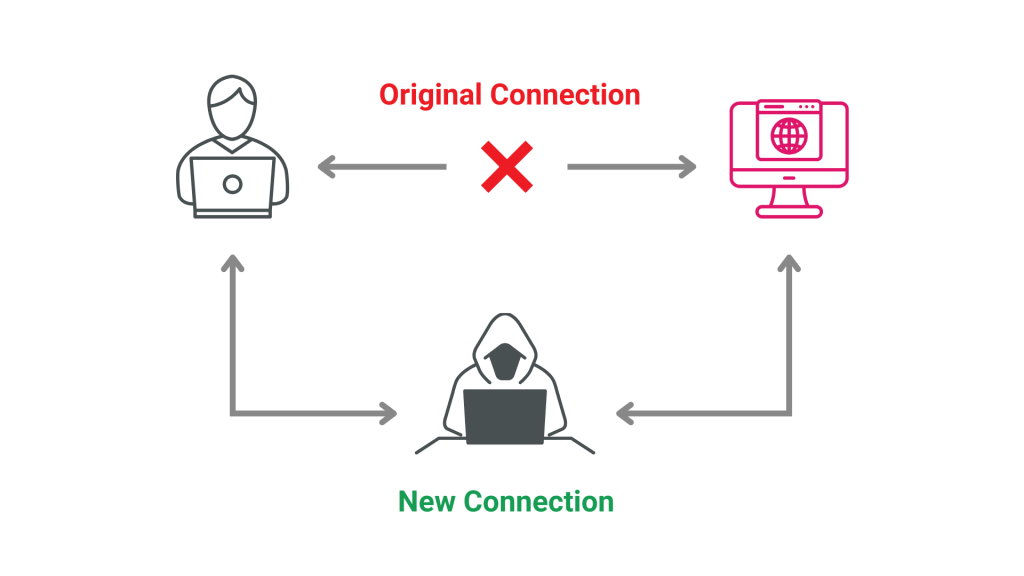
A man-in-the-middle (MITM) attack is one of the most common and dangerous threats in cybersecurity. This attack occurs when a malicious actor secretly positions themselves between two communicating parties, intercepting and altering the communication without either party realizing it. These attacks can target communications between individuals, between systems, or between a person and a system. The attackers aim to steal sensitive information such as login credentials, financial details, or personal data. They may also attempt to manipulate victims into taking certain actions, like changing passwords or transferring money.
While these attacks target individuals most times, they pose significant risks to businesses and organizations as well. Software-as-a-service (SaaS) applications like messaging platforms, file storage systems, and remote work tools are common entry points for attackers. Once inside, they can compromise various assets including customer data, intellectual property, and confidential company information.
Man-in-the-middle attacks occur when an attacker secretly intercepts and potentially alters communication between two parties without their knowledge, often to steal credentials, financial data, or sensitive information. These attacks typically exploit insecure networks, compromised certificates, or spoofed protocols, enabling the attacker to read, modify, or redirect traffic. Strong encryption, certificate validation, and secure network practices are key defences against man-in-the-middle attacks.
How Man in the Middle Attacks Work
The Interception Phase
During the interception phase, attackers gain access to a network, usually through poorly secured Wi-Fi routers or by manipulating domain name system (DNS) servers. They scan for vulnerabilities and possible entry points, with weak passwords being the most common weakness they exploit. More sophisticated attackers might use techniques like IP spoofing or cache poisoning. Once they’ve identified a target, they deploy various tools to capture transmitted data, redirect traffic, or otherwise interfere with the user’s online experience. When attackers intercept network traffic, they can see everything passing through the compromised connection. This includes emails, web browsing activity, chats, and even financial transactions if they’re not properly secured.
The Decryption Phase
After successfully intercepting communications, attackers must decode the captured data to make it understandable. This decryption phase turns the scrambled information into readable content, revealing passwords, credit card details, or sensitive messages.
Attackers can use this decrypted data for various harmful purposes, such as:
- Identity theft to open fraudulent accounts
- Unauthorized purchases using stolen payment information
- Banking fraud
- Corporate espionage
- In some cases, attackers conduct MITM attacks simply to disrupt operations and create chaos for their victims
Common MITM Attack Techniques
IP Spoofing
In IP spoofing, attackers disguise themselves by altering packet headers in an IP address to imitate a trusted entity. When users try to access a website or service using the spoofed IP, they’re unknowingly redirected to the attacker’s site instead. This fake site often looks identical to the legitimate one, tricking users into entering their credentials or other sensitive information.
DNS Spoofing/Cache Poisoning
DNS spoofing involves corrupting a domain name system cache to divert traffic from legitimate websites to malicious ones. Attackers infiltrate DNS servers and alter website address records. When users attempt to visit these sites, the tampered DNS records send them to fraudulent sites that mimic the originals. This technique allows attackers to collect login credentials and personal information without raising suspicion.
ARP Spoofing
Address Resolution Protocol (ARP) spoofing links an attacker’s MAC address with the IP address of a legitimate user on a local network through fake ARP messages. The result is that data intended for the legitimate IP address gets transmitted to the attacker instead. This technique works particularly well on local networks where ARP is commonly used to resolve IP addresses to physical machine addresses.
Wi-Fi Eavesdropping
One of the simplest MITM techniques involves creating free, malicious Wi-Fi hotspots in public places. These hotspots typically have names suggesting their location (like “Coffee Shop Free Wi-Fi”) and don’t require passwords. Once someone connects to such a hotspot, the attacker gains visibility into all their unencrypted online activities. This passive attack requires minimal technical skill yet can yield substantial amounts of sensitive data.
HTTPS Spoofing
HTTPS spoofing sends fake security certificates to victims’ browsers when they request connections to secure websites. These certificates contain digital thumbprints associated with compromised applications, which browsers verify against their lists of trusted sites. If accepted, attackers can access any data entered by the victim before it reaches the legitimate application.
SSL BEAST Attacks
The Browser Exploit Against SSL/TLS (BEAST) targets vulnerabilities in Transport Layer Security (TLS) version 1.0. Attackers infect computers with malicious JavaScript that intercepts encrypted cookies sent by web applications. They then compromise the application’s cipher block chaining to decrypt cookies and authentication tokens, gaining unauthorized access to user accounts.
SSL Hijacking
In SSL hijacking, attackers pass forged authentication keys to both users and applications during TCP handshakes. This creates what appears to be secure connections, when in fact the attackers control the entire sessions. Users believe they’re communicating directly with legitimate applications while attackers monitor and possibly alter all exchanged information.
SSL Stripping
SSL stripping downgrades HTTPS connections to less secure HTTP by intercepting TLS authentication sent from applications to users. Attackers forward unencrypted versions of websites to users while maintaining secure connections with the actual applications. This makes users’ entire sessions visible to attackers while victims remain unaware of the security downgrade.
MITM Attack Examples
The Trickbot shaDll Module
A notable example of a sophisticated MITM attack was identified by cybersecurity researchers at CrowdStrike. They discovered a Trickbot module called shaDll that installed illegitimate SSL certificates on infected computers, allowing the tool to access user networks. Once inside, the module could redirect web activity, inject code, capture screenshots, and collect sensitive data.
What made this attack particularly interesting was the apparent collaboration between two known cybercrime groups: LUNAR SPIDER and WIZARD SPIDER. The module used LUNAR SPIDER’s BokBot proxy module as a foundation and then deployed WIZARD SPIDER’s TrickBot module to complete the attack.
Banking Trojans
Many banking Trojans use MITM techniques to steal financial information. These malicious programs infect users’ devices and wait for them to log into banking websites. When users attempt to make transactions, the Trojans intercept the communications, alter transaction details (such as changing recipient account numbers), and display the original, expected information to users. This allows attackers to steal funds while victims remain unaware until they notice the missing money.
How to Detect Man in the Middle Attacks
Unusual Certificate Warnings
Web browsers display warnings when they encounter suspicious SSL/TLS certificates. If you receive unexpected certificate alerts when visiting familiar websites, it could indicate a MITM attack attempting to intercept your communications. Rather than clicking through these warnings, users should immediately disconnect from the network and try connecting from a different, trusted network.
Performance Issues
MITM attacks often cause noticeable slowdowns in internet connection speeds because traffic is being routed through the attacker’s systems before reaching its intended destination. If websites or applications suddenly become sluggish without apparent reason, especially on public networks, it might signal an attack.
Unexpected Logouts or Authentication Requests
If you’re repeatedly logged out of accounts or asked to re-authenticate when you normally wouldn’t need to, it could indicate session hijacking as part of a MITM attack. Attackers may be attempting to capture your credentials when you re-enter them.
URL Discrepancies
Always check website URLs carefully. MITM attackers often use similar-looking domains with slight variations (like “bankofamericaa.com” instead of “bankofamerica.com”). Also, verify that websites use HTTPS (look for the padlock icon in your browser’s address bar) when handling sensitive information.
Prevention Strategies for Organizations
Strong Encryption Protocols
Organizations should use strong TLS/SSL protocols (TLS 1.3 is currently the most secure version) for all communications. Encrypting data makes it significantly harder for attackers to decipher intercepted information, even if they manage to capture it.
Certificate Pinning
Certificate pinning links specific SSL/TLS certificates to particular domains, preventing attackers from using fraudulent certificates to intercept traffic. This technique allows applications to reject connections that present unexpected certificates, making HTTPS spoofing attacks much more difficult to execute.
Virtual Private Networks (VPNs)
VPNs create encrypted tunnels for data transmission, shielding information from potential eavesdroppers. Organizations should equip all devices with VPN capabilities and require their use, especially when employees connect to networks outside the office. VPNs add an additional layer of protection against various MITM techniques.
Multi-Factor Authentication (MFA)
MFA requires additional verification beyond passwords, making it harder for attackers to use stolen credentials. Even if attackers capture usernames and passwords through MITM attacks, they typically can’t access the secondary authentication factors like physical security keys or authentication apps. This significantly reduces the risk of unauthorized access.
Prevention Strategies for Individuals
-
Avoid Unsecured Wi-Fi Networks
-
Verify Website Security
-
Use Updated Security Software
-
Enable Two-Factor Authentication
-
Be Alert to Warning Signs
-
Keep Software Updated
-
Log Out of Sensitive Accounts
Technical Countermeasures Against MITM Attacks
HTTP Strict Transport Security (HSTS)
HSTS is a web security policy mechanism that helps protect websites from protocol downgrade attacks and cookie hijacking. It forces browsers to use secure HTTPS connections with websites that implement it, preventing SSL stripping attacks. When a website enables HSTS, browsers automatically convert all attempts to access the site via HTTP to HTTPS, eliminating opportunities for attackers to downgrade connection security.
HTTPS Everywhere
HTTPS Everywhere is a browser extension that encrypts communications with many major websites, automatically switching thousands of sites from HTTP to more secure HTTPS connections when possible. This extension helps protect against MITM attacks by ensuring encrypted connections even when users don’t specifically request them.
DNS Security Extensions (DNSSEC)
DNSSEC adds security to the Domain Name System by providing authentication of DNS data. It verifies that the information received comes from the correct source and hasn’t been tampered with during transmission. This helps prevent DNS spoofing attacks by allowing DNS servers to verify the authenticity of DNS records.
The Business Impact of MITM Attacks
Financial Losses
Direct financial impacts can include theft of funds, fraudulent transactions, and costs associated with investigating and remediating breaches. Organizations might also face regulatory fines for failing to protect customer data properly. The costs of strengthening security systems after an attack add to the financial burden.
Reputational Damage
News of security breaches can severely damage brand reputation and customer trust. When customers learn their sensitive information was intercepted due to inadequate security measures, they often take their business elsewhere. Rebuilding reputation after such incidents requires significant time and resources.
Intellectual Property Theft
These attacks targeting corporate communications can lead to theft of valuable intellectual property. Competitors or nation-state actors might intercept sensitive research and development information, strategic plans, or proprietary technologies, causing long-term competitive disadvantage.
Operational Disruption
Responding to MITM attacks often requires taking systems offline, implementing emergency security measures, and diverting resources to investigation and remediation. These activities disrupt normal business operations, potentially for extended periods, affecting productivity and revenue.
Conclusion
Man-in-the-middle attacks remain a significant threat in cybersecurity. As communication technologies advance, so do the techniques used by attackers to intercept and manipulate sensitive information. As we continue to rely more heavily on digital communications for both personal and business purposes, the importance of securing these communications against interception will only grow. The ongoing cat-and-mouse game between attackers and defenders ensures that MITM attack and prevention techniques will continue to advance, requiring constant attention to stay ahead of threats.